The curse of oil
A couple of years ago I read a book called “The World is Flat” by Thomas Friedman. It was about globalisation and its effects on everyone. In it, there was an interesting chapter called The Curse of Oil. To sum it up, he stated that many countries with oil (especially in the Middle East) just depend on that one exhaustible resource for their countries’ wealth. Much to Di’s delight, he used her home country of Taiwan as an example of what happens when you don’t have rich natural resources to sell to others. For those who don’t know, Taiwan is a small rocky island off the coast of China with about 20 million inhabitants and barely any natural resources. It also gets blasted by typhoons and earthquakes on a regular basis. I know, it sounds awesome. However, they have amassed the 4th largest financial reserves in the world. How? Through tapping its best resource, its people. Much of Taiwan’s exports and wealth are a result of the creativity and entrepreneurship of its citizens, not the products of a mine, oil well, or forest. Countries like Singapore and Korea are similarly succeeding.
Now when I read the book, I hadn’t been to an oil rich Middle Eastern state but I could relate the chapter to my home province of Alberta, Canada. Alberta has the highest high school drop-out rate in Canada because kids are lured to decent paying manual jobs in the oil and gas industry or the service industry that supports it. Call me presumptuous, but I personally believe it’s hard to nurture creativity and inventiveness when you’ve only made it to grade 10. I’m not saying it can’t happen, but the chances of a Bill Gates or Steve Jobs emerging from those circumstances is extremely slim.
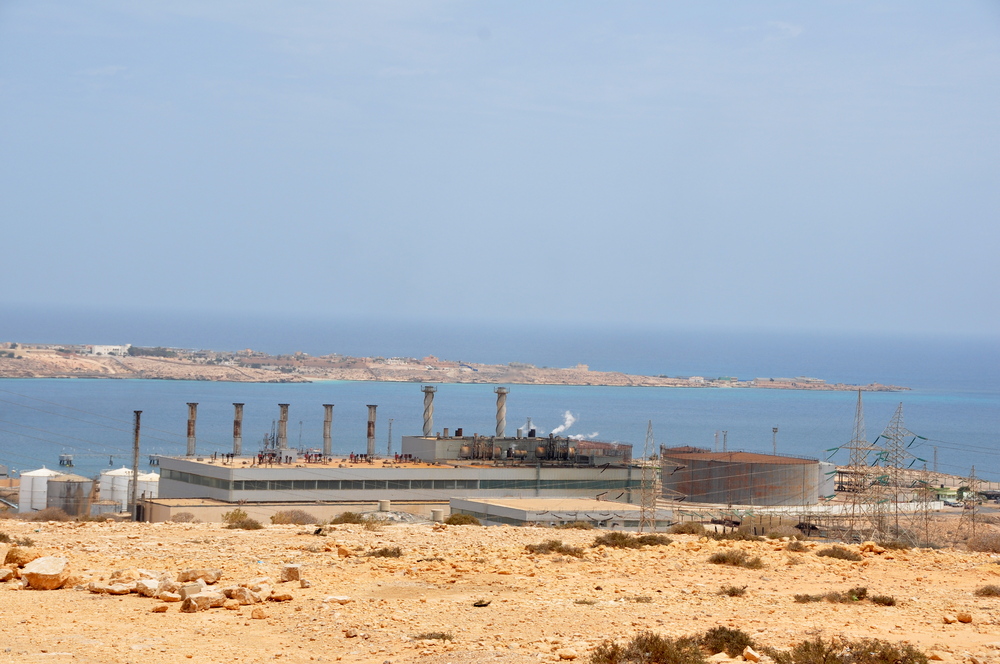
So now back to Libya, a country that has enormous oil reserves for a population of about 5 million Libyan citizens. I just want to first state that all the information I obtained here was from people I talked to and not some fact-based research report so if I’m wrong I apologize. Gaddafi, Libya’s leader for the past 40 years, has taken the money from oil and provided free housing if needed, free education, and huge subsidies on food and petrol. I am totally serious when I say that water is more expensive than gas here. It costs about 5 Canadian/US dollars to fill up your tank. In addition, he gives each Libyan a significant monthly allowance, and more with each child you have. When you leave a hospital after giving birth, the hospital actually pays you so you can buy diapers and such. The people don’t get enough money to buy Ferraris or anything, but on the whole everyone lives comfortably and no one lives in poverty. As a result, there is no homelessness, and no one is hungry. To us, this may sound pretty awesome, but there are significant negatives as well. Firstly, most Libyans don’t really work that much. A few hours here, a few hours there, but they’re not really that productive in an economic or contributory sense. Most manual or service jobs go to poor immigrants from Egypt, Turkey, Tunisia, and Sub Saharan Africa who don’t get monthly government stipends. It’s an interesting sight to see a lot of these people sitting by the roads everyday with tools for work, hoping a Libyan picks them up to do a job. Now the part I think is awesome is the free education, including university. But I’ve been told that the new generation doesn’t really enrol. They don’t see a good education to secure a decent paying job as a necessity, as a house and money is provided for you if you want. They unfortunately don’t see education for the sake of learning and enlightenment as worth it either (but I don’t think the teenagers here are unique in that respect compared to the rest of the world). The result has been declining university enrolment. There is not enough incentive to become super rich because the chance of you succeeding is really hard unless you are in cahoots with corrupt officials. Thus people just basically hang out all day. As an environment, it is intellectually stifling. A lot of the corporate and white collar jobs are filled by expats from European and American companies. Increasingly the Koreans and the Chinese are coming too. There were tons of them in Tripoli and a lot came to talk to us thinking we were there working as well. They all get their piece of the pie and obviously return home.
Environmentally this has also produced disastrous results. What do you think happens when gas is cheaper than water? People are as wasteful with it as we are with water in Canada. Fuel efficiency is not something anyone cares about, and the emissions from vehicles are pretty disgusting. Recycling is definitely not part of the program here, and all you see on the roads, parks and beaches are endless piles of bottles, litter and debris.
When I asked people what would happen when the oil ran out, they basically implied that it wouldn’t. Or if it did it would be way in the future. When I asked how far, they motioned really far and said maybe 50 years as if that was thousands of years away. We drove over bridges where no water was flowing underneath, and again when I asked when the last time they saw water there was, they also said a long long time ago (which turned out to be about 30 years). I think this poor concept of time and planning will lead to devastating, irreversible results for its people unless something changes. Some older people who knew Libya when there was no oil were hoping the oil would run out today so that it would propel their children towards achievement and their country towards development (like in Taiwan). The youth I talked to however, seemed uninterested.
When you can’t unlock the creativity, inventiveness, and potential of your people it’s a shame. Some say Gaddafi likes this so he can stay in power, and I really have no comment on that. No country in the world has been able to inspire all of its citizens to reach their potential, but the difference between here and others I’ve been to is obvious. You can tell that Tunisia and Morocco are trying significantly harder to improve other industries (especially tourism) as they have no oil. This short term wealth creating an undiversified economy and an untrained/unlearned population will in all likeliness end poorly for Libya when the oil runs out.
As an outsider it’s easy to blame Libya’s problems on its leadership and the individual choices of its people. But as a global citizen, you can’t help but feel more than partially responsible for what’s happened in this part of the world due to our addiction to oil. For the sake of the little kids we met here at the generous people’s houses, I hope change and improvement will come. Because if the curse comes to fruition, it really will affect them and their children the most.
Libya – Amazing ruins, a legendary oasis, but most of all, generous and friendly people

So we’ve spent the last 9 days in Libya, and it’s been quite an experience. We visited the Roman ruins of Sabratha and Leptis Magna, and the Greek/Roman ruins of Cyrene. These ruins put the ones we saw in Morocco and Tunisia to shame, especially Leptis Magna. The best part was that there was virtually no one apart from us at any of these sites. We also visited Ghadames, an Oasis town in southern Libya, close to the Algerian and Tunisian border. It too was pretty awesome, and unlike the old cities of the other North Africa countries, this one was uninhabited. People moved out about 20 years ago to the newly built government homes just outside the old city gates. Access to running water and electricity tend to be pretty good motivators to move. However they’ve maintained the old city quite nicely, and as a result we enjoyed a quiet guided walk through its streets. Again, we were basically the only tourists. You may ask why all these great tourist attractions are devoid of visitors; well the answer is Libya’s ruler Colonel Gaddaffi, and I’ll elaborate more on this in my next post. I was told by Libyans that he is not a fan of large amounts of tourists and thus makes it hard for them to get here. As I’ve said before, you need a visa and when you arrive you need to be part of an organized tour (and they are not cheap at all considering the country is not expensive). He had an argument with the Swiss a few months ago and decided to close the border to all Europeans for 3 months, just like that. However, by keeping tourists out he hasn’t jaded the population with the almighty tourist dollar which turned out to be awesome for us.
 fromwonderintowonder
Recent Comments